
EASY EFFORT. A STRONGER AEROBIC BASE.
Zone 2 tracking.
A week you
can see.
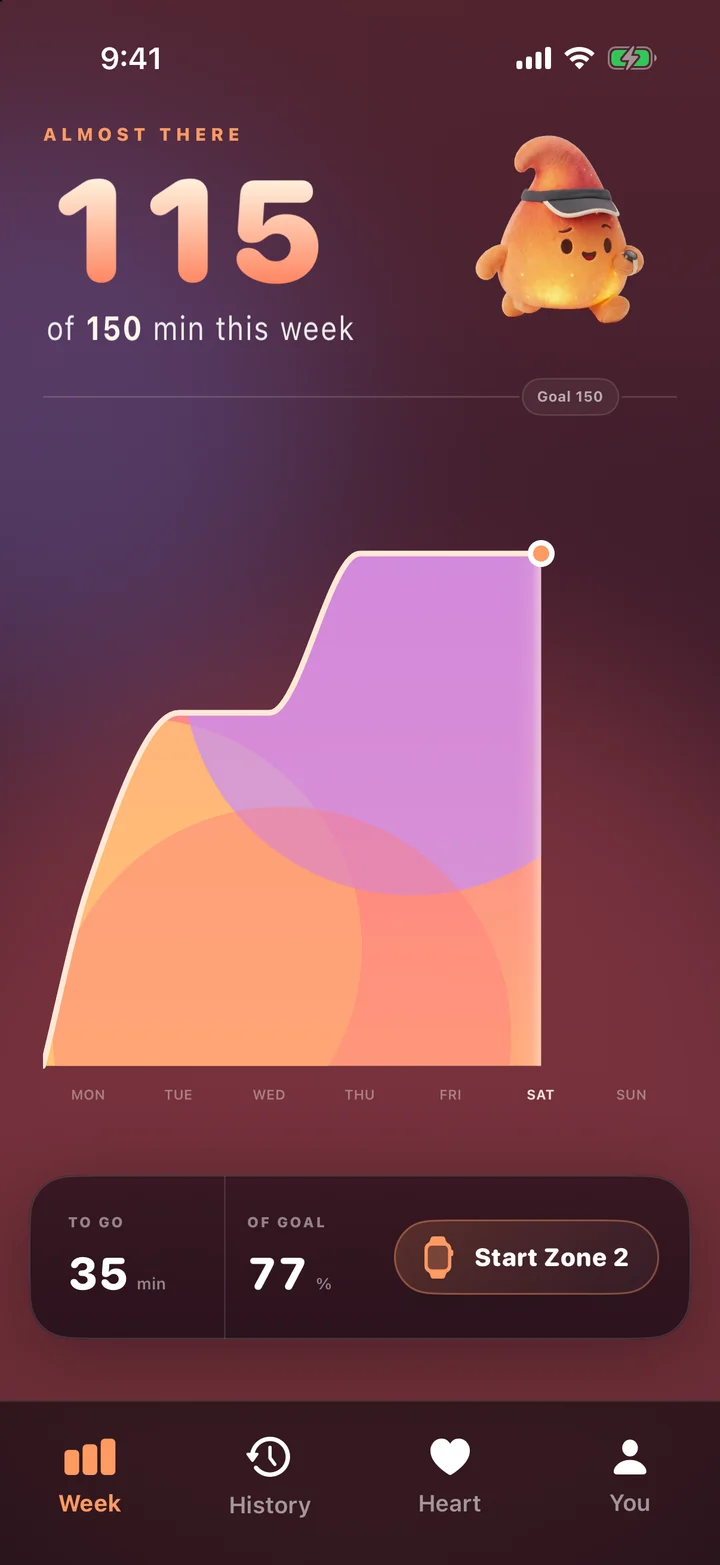
Build an aerobic habit for the life you want to keep living. Base makes your zone 2 heart rate, qualifying workout minutes and weekly progress easy to follow.
Coming to iPhone & Apple Watch · Works with Apple Health
WHY ZONE 2 IS WORTH YOUR TIME
Train for the life
outside the app.
Build your endurance. Give your muscles a reason to adapt. Make steady movement part of the years ahead. There is real science behind taking the easier effort seriously.
A stronger base.
Low-intensity endurance training can improve aerobic fitness. You do not have to make every workout an all-out effort to build capacity.
Evidence from low-intensity training trialsMuscles that adapt.
Steady endurance training can improve markers of the muscle machinery that uses oxygen and fat for energy during sustained exercise.
Evidence from broader endurance trainingCapacity for life.
Aerobic fitness is part of staying physically capable as you age. Think of the walks, trips and everyday movement you want to keep doing.
Healthy-aging evidence, not a lifespan promise“It was the consistency over 50 years that got them there.”
Explore the science
Aerobic fitness: a 2026 synthesis of 50 randomized studies found that low-intensity endurance training improved aerobic fitness in healthy adults aged 18–65, with smaller average improvements in blood pressure and blood lipids. It studied a broader low-intensity range, not one app’s zone boundaries. Read the research.
Muscle energy systems: a six-week cycling study found improved mitochondrial markers and greater fat use during exercise after steady endurance training. Sprint training produced similar adaptations; this was not a zone-2-only experiment, and greater fat use is not the same as body-fat loss. Read the research.
The aging story: Galpin coauthored a small observational study of nine lifelong endurance athletes and six untrained men aged 80 and over. The athletes had much higher aerobic capacity. This supports the long view on fitness; it does not prove that zone 2 alone preserves independence or extends life. Read Galpin’s study.
Zone 2 is an approachable part of a broader routine, not a replacement for strength work or other appropriate activity. General guidance recommends at least 150 minutes of moderate activity, or 75 vigorous minutes, or a combination, plus strength work on two days—not 150 minutes in one heart-rate zone. CDC activity guidance.
ONE WORKOUT IS A START. A WEEK IS A HABIT.
Your cardio, without
the mental arithmetic.
A walk, a ride, an easy run. Keep the recording routine that works for you. Base takes care of adding up the qualifying zone 2 minutes.
- 01 / RECORD
Move your way.
Record your workout with Apple Watch or a compatible app that saves workouts and heart-rate data to Apple Health.
- 02 / CONNECT
Let Base count.
Give Base permission to read that data. It uses your zone range and activity settings to count qualifying workout minutes.
- 03 / KEEP GOING
See your whole week.
Know what you have done, what is left toward your goal, and which sessions contributed. No second manual workout log.
Not every recorded minute is a zone 2 minute. Missing heart-rate evidence and your counting settings can affect the total. Qualifying activity outside a recorded workout can also count when Apple Health provides enough supporting evidence.
LESS OPENING. MORE KNOWING.
Your week.
One quick glance.
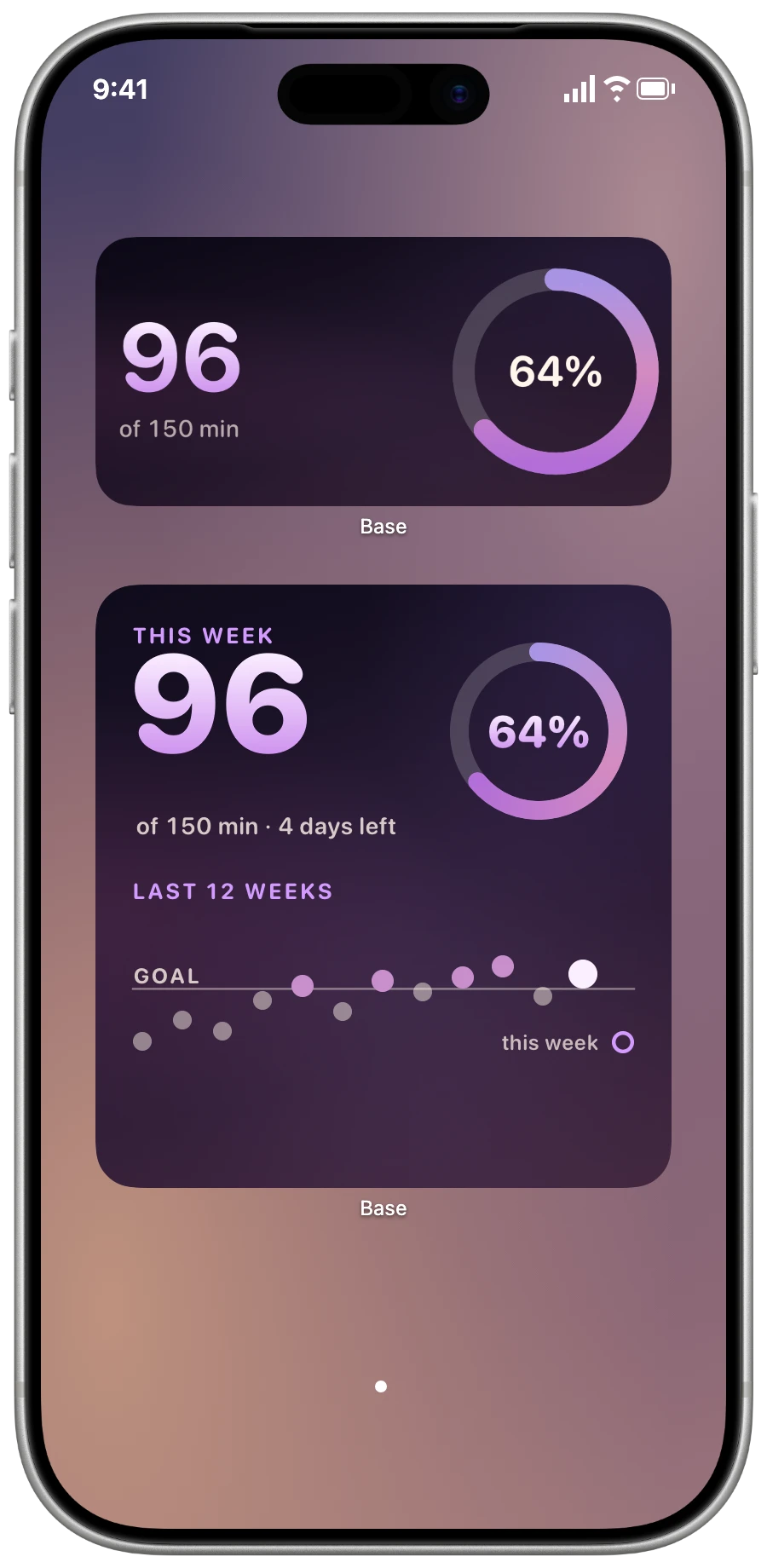
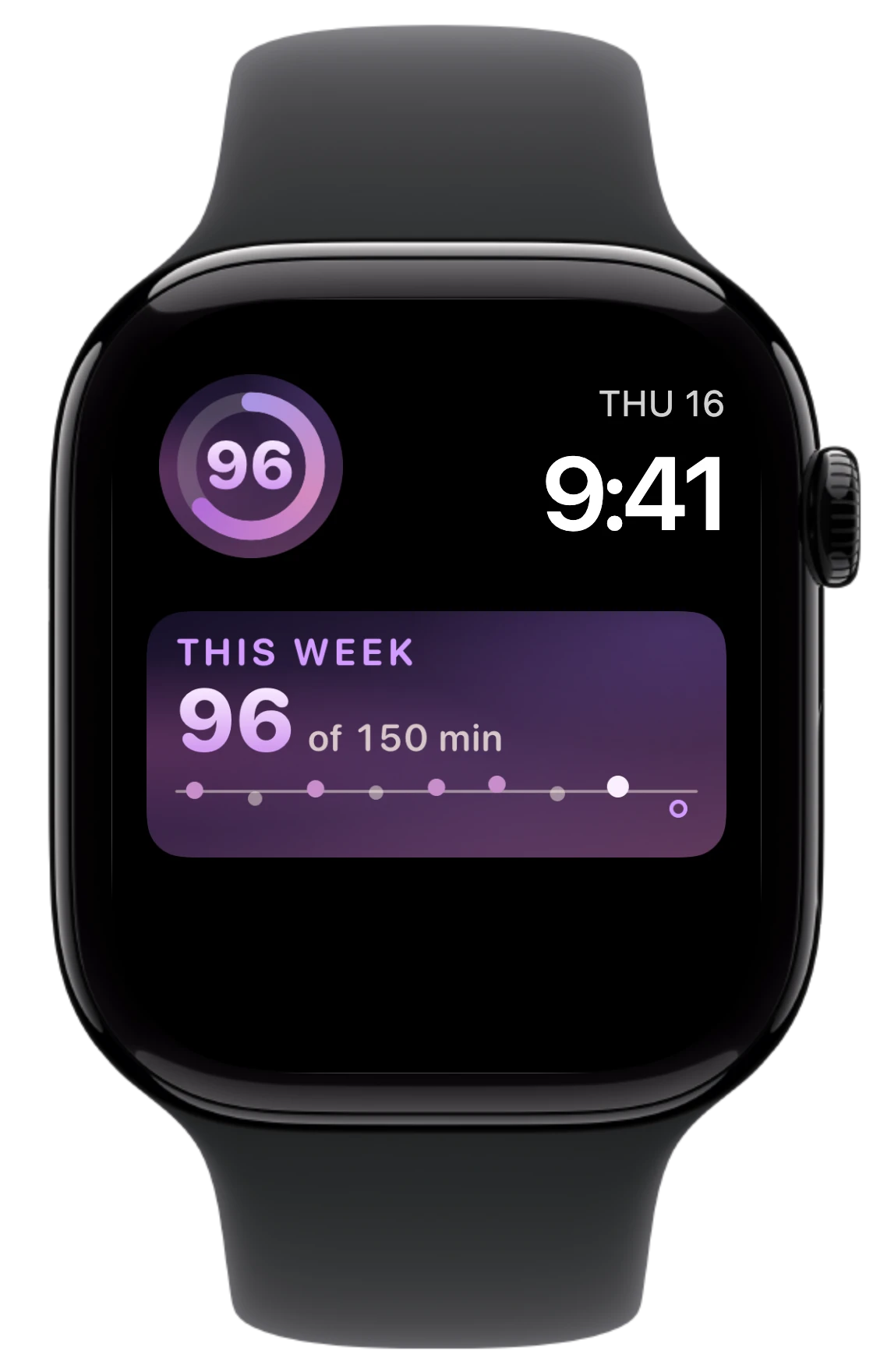
Your zone 2 minutes belong where you already look—not buried a few taps inside an app.
- iPhone widgets.Put your weekly minutes and goal on your Home Screen. Choose the size that fits your day.
- Apple Watch complications.Add Base to a supported watch face for a quick read on your weekly progress.
These views show your latest synced weekly progress. For live heart rate during a workout, use the Base Watch app .
BUILD AN AEROBIC BASE. KEEP THE LONG VIEW.
One good week.
Then another.
Easy cardio is a habit, not a leaderboard. See your weeks together, notice patterns and make room for the next session.
Base is focused on zone 2 tracking—not another all-purpose fitness dashboard. Weekly history helps you see consistency. Optional live Apple Watch guidance helps you follow your configured range during a Base workout.
Start with our Apple Watch guide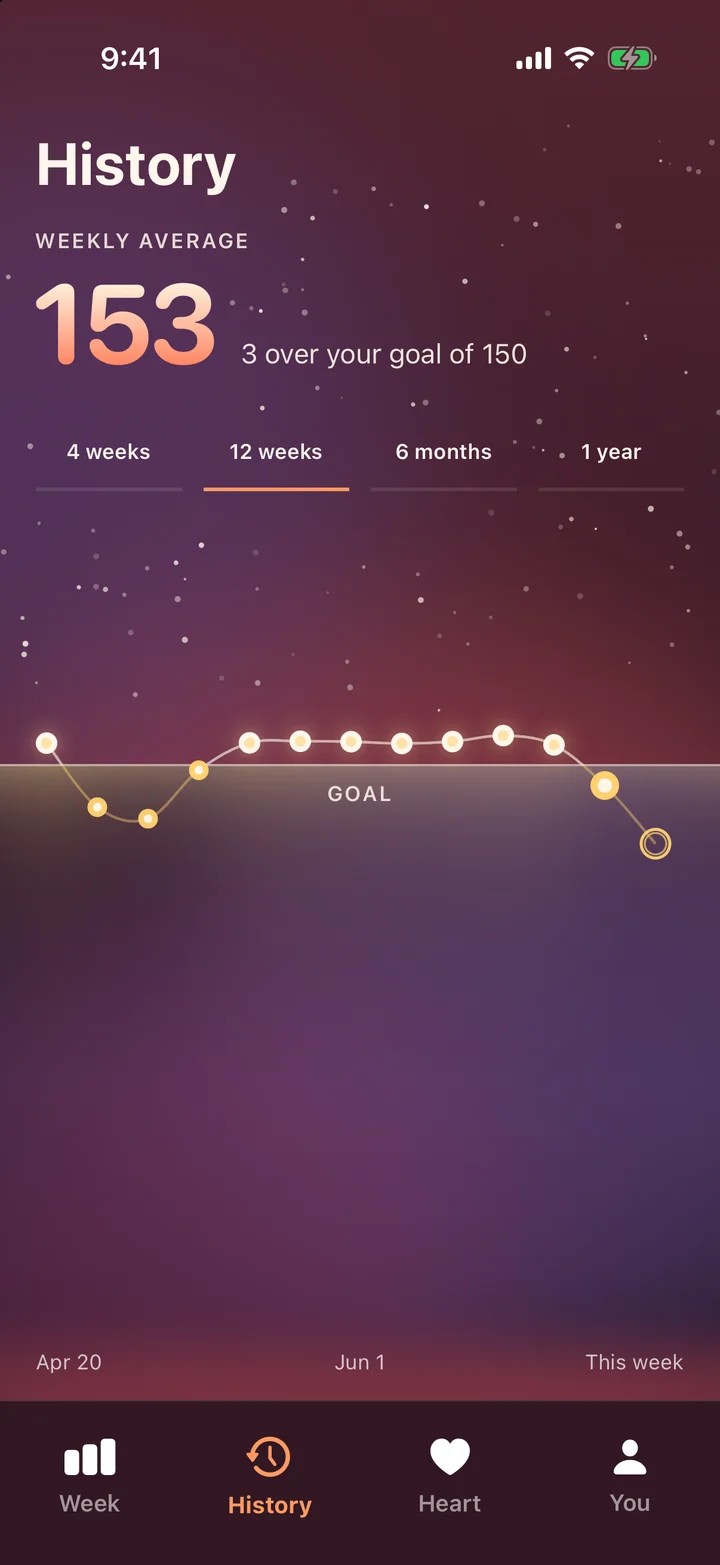
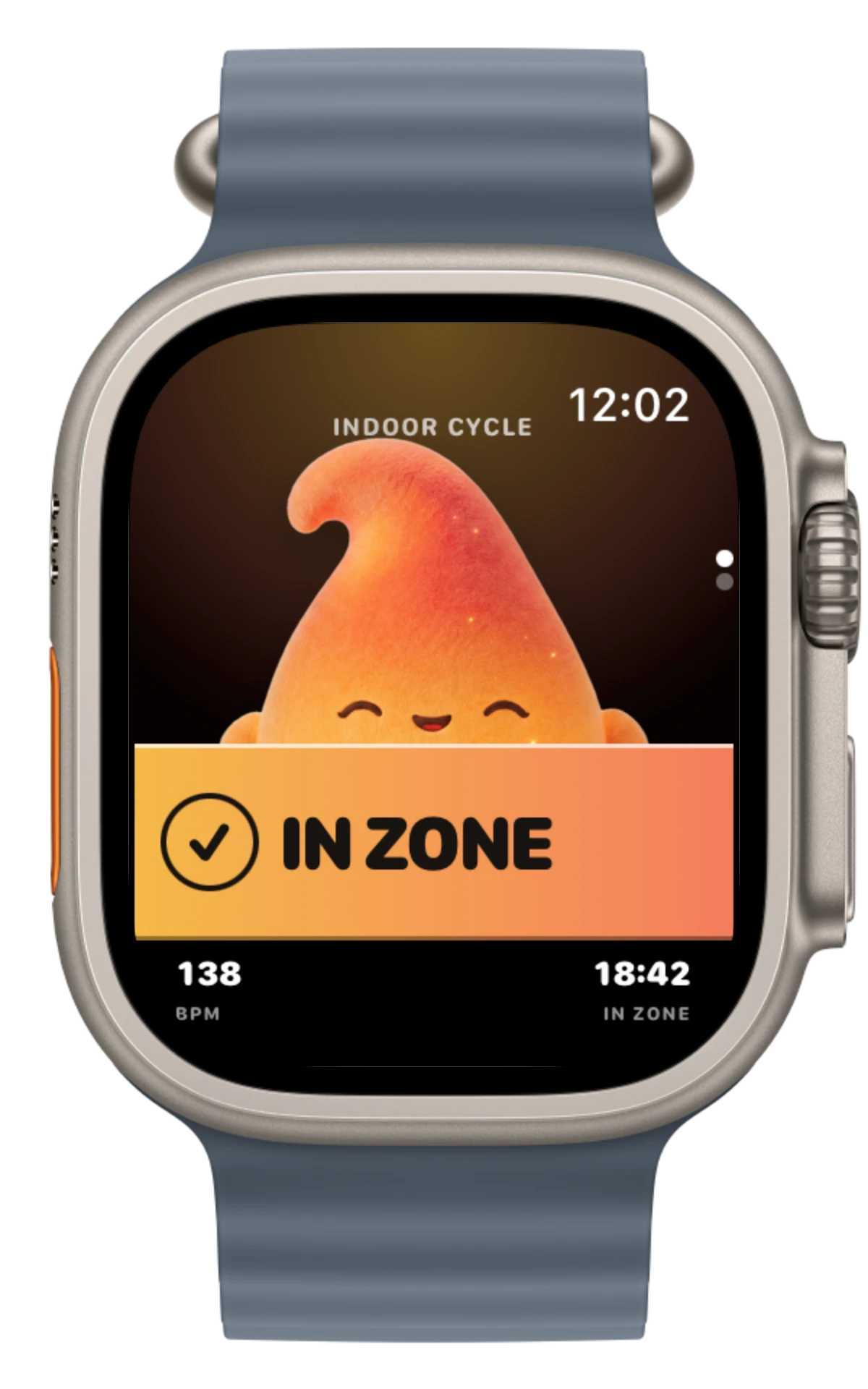
A clear number. A little encouragement.
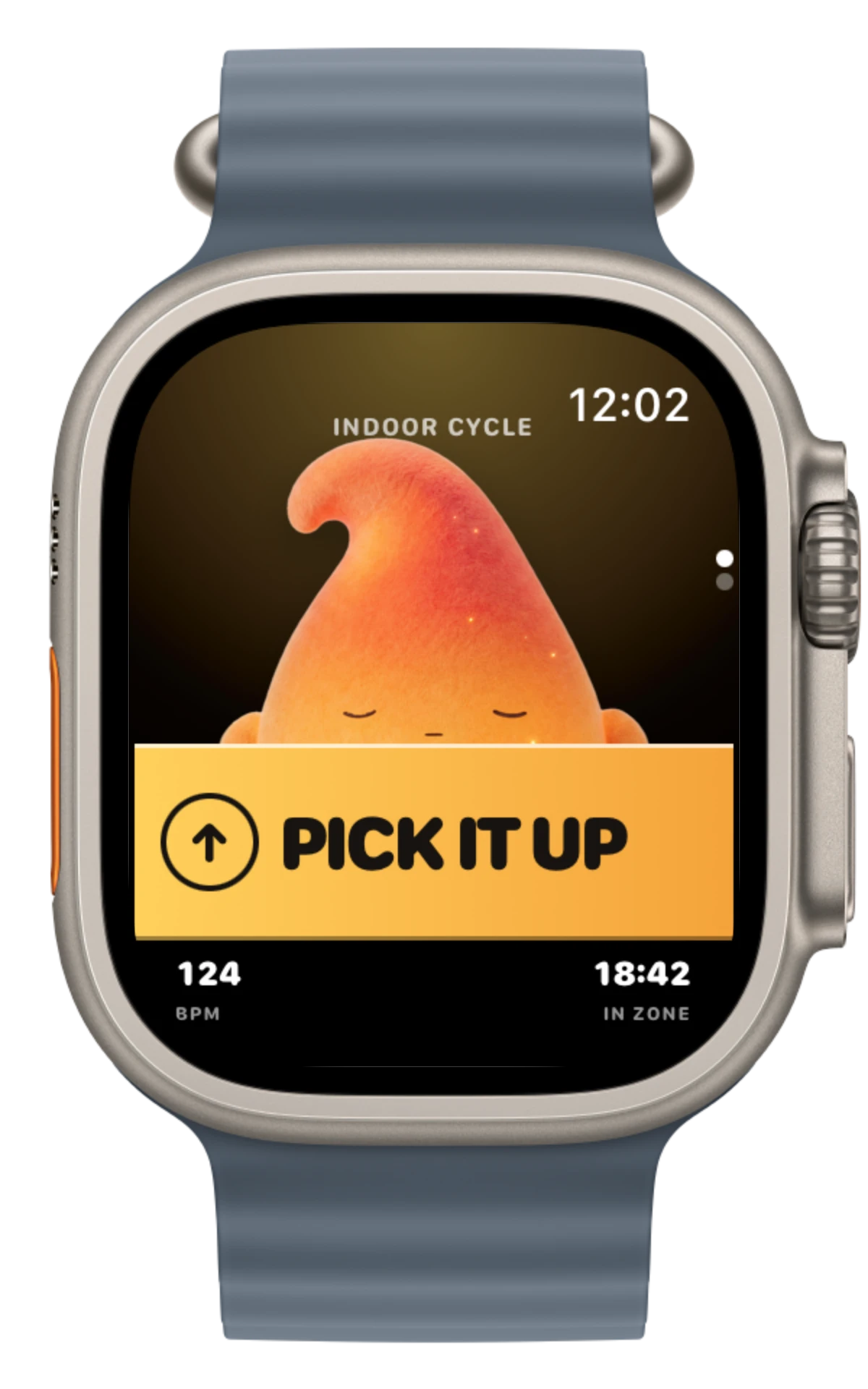
A gentle cue to pick it up.
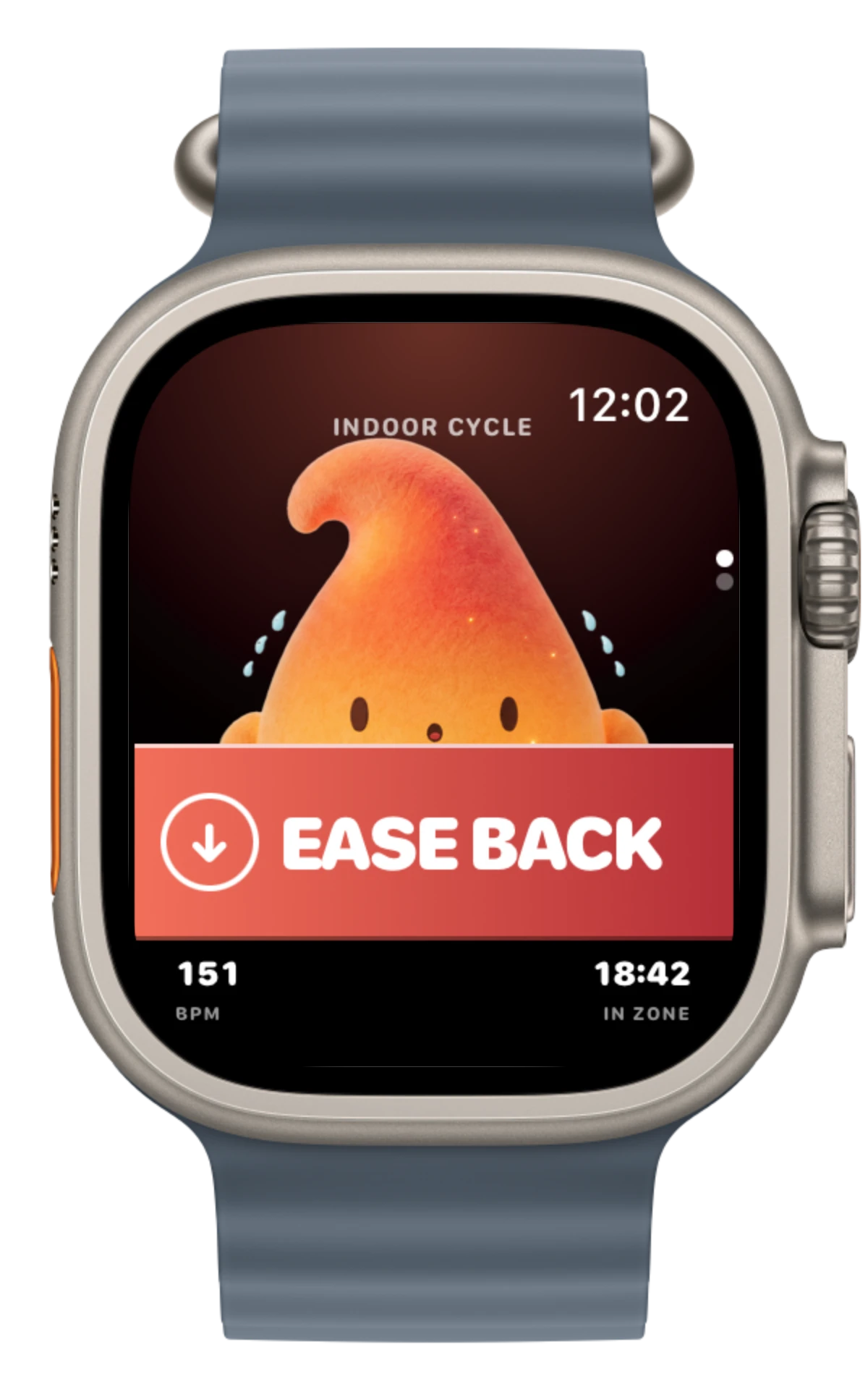
A clear cue to ease back.
Current Watch app · illustrative demo data
Apple Watch Ultra 3 · example range, not a recommendation
LIVE ZONE 2 GUIDANCE ON APPLE WATCH
Less checking.
Keep moving.
Below your range? In it? A little above? See where you are with a glance at your wrist.
- Start on your watch. Or your phone.Choose a Base workout on either device. Apple Watch records the session; your iPhone can mirror it.
- Your heart rate, easy to read.Follow your BPM, time in zone and guidance for your configured range without digging through a dashboard.
Live workouts require Apple Watch and the relevant Health permissions. Widgets track the week; the Watch app guides the workout.
More about zone 2 on Apple WatchA CLEARER START
Find your way
into zone 2.
See your zones.
Understand your week.
What your Watch already does, and what a weekly tracker adds.
YOUR WEEKHow much
is enough?
Separate general activity guidance from a personal zone 2 goal.
THE SCIENCEMore than
minutes on a screen.
Aerobic fitness, muscle energy and healthy aging: explore the evidence.
A FEW GOOD QUESTIONS
Before you begin.
What is zone 2 cardio?
Zone 2 commonly describes an easy, sustainable aerobic effort in a five-zone training model. It is often discussed as aerobic base training. The exact heart-rate range depends on the method and the person; a zone label is not a medical measurement.
How does Base track my zone 2 minutes?
With your permission, Base counts qualifying zone 2 time from recorded workouts and verified everyday activity toward your weekly goal. Available heart-rate evidence, your zone range and your activity settings determine what counts. Unsupported gaps do not count.
Do I need to start a workout?
Not always. Base can also count qualifying activity outside a recorded workout when Apple Health has sufficiently frequent heart-rate readings and supporting Apple Exercise Time. Recording a workout remains a reliable way to provide the data Base needs; not every incidental movement qualifies. For live zone guidance, start a Base workout from iPhone or Apple Watch. Apple Watch records the session; iPhone can mirror it.
Can I see my zone 2 progress without opening Base?
Yes. Base offers iPhone Home Screen widgets and Apple Watch complications for your latest synced weekly minutes and goal progress. They are weekly-progress views, not continuous heart-rate monitors. For live heart rate and zone guidance, start a Base workout with Apple Watch.
Why might Base and Apple Watch show different zone 2 totals?
Compare the actual heart-rate boundaries, workout selection and available samples, not just the zone label. Different methods and counting rules can produce different totals from the same session.
Is 150 minutes a week a zone 2 prescription?
No. Public-health recommendations cover overall moderate or vigorous activity, not 150 minutes in one app-defined heart-rate zone. Base lets you follow a weekly goal, but that goal does not replace an individual exercise plan or strength training.
Does my heart data leave my device?
Base keeps HealthKit-derived data on your devices. Product analytics and crash reporting are separate from health data; the privacy notice explains them and your controls. Joining the website waitlist shares your email for the purpose described beside the form.
Can I download Base now?
Base is preparing for launch on iPhone and Apple Watch. Join the waitlist for launch and occasional product emails. Joining is not an app download, purchase or subscription. The app requires iOS 26 and watchOS 26 or later.
More questions? Visit support. For personal exercise advice, speak with a qualified clinician.
COMING TO IPHONE & APPLE WATCH
Make room
for a good week.
Be first to hear when Base is ready.
Free to join. No purchase.
Privacy & details
Your health data stays yours.
HealthKit-derived data stays on your devices. Product analytics, crash reporting and waitlist email are separate; our privacy notice explains the details.
Who you’re hearing from.
Base Cardio LLC
605 West 9th Street #1058, Austin, TX 78701, United States
hello@basecardio.com
You can withdraw consent or unsubscribe at any time.
Base is not a medical device and does not diagnose, treat or guarantee health outcomes. Screens show illustrative demo data, not personal results. Apple, iPhone, Apple Watch and Apple Health are trademarks of Apple Inc.